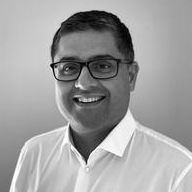
Consultant Oral and Maxillofacial Surgeon

Specialist oral surgery for children and adults

Mr Nikhil Maini is one of very few oral and maxillofacial surgery consultants in the region who offers these procedures for children, and he treats adults too. He exposes buried teeth for orthodontic treatment, removes impacted and wisdom teeth, treats lesions of the mouth and lips, and carries out corrective jaw surgery.

Seeing patients in Brighton, Tunbridge Wells and Hassocks.

Information for referring clinicians

Care that fits the patient, whatever their age

Few consultants in Sussex and Kent offer oral surgery for children. Mr Maini does, so families can be treated close to home, and adults see the same consultant.

Children and teenagers

Often referred by an orthodontist when an adult tooth has not come through on its own.

  • One of very few consultants in the region offering these procedures for children
  • Treatment planned alongside your child's orthodontist and their braces
  • Consultations for children and young people at Nuffield Health Brighton Hospital, where surgery is only for those aged 16 and over
  • Surgery in theatre at Nuffield Health Tunbridge Wells Hospital, which has full paediatric facilities
  • Outpatient consultations and procedures for children at Hassocks, for self-pay patients
  • Parents involved in every decision, with time for questions

Adults

Referred by a dentist or orthodontist, or coming directly with a problem tooth or a change in the mouth.

  • Many procedures carried out in clinic under local anaesthetic
  • Theatre and general anaesthetic when that is the better option
  • Corrective jaw surgery, planned jointly with your orthodontist
  • Tissue removed can be examined in the laboratory, with results explained to you
  • Consultations and treatment in Brighton and Tunbridge Wells, and at Hassocks for self-pay patients

Main areas of interest

Exposing buried teeth

Uncovering an adult tooth stuck in the jaw, often with a gold chain, so the orthodontist can guide it into line.

About tooth exposure

Removing impacted teeth

Wisdom teeth and other buried teeth, including coronectomy, in clinic or in theatre.

About wisdom tooth surgery

Lesions of the mouth

Biopsy and removal of lumps and patches on the lips, tongue and palate.

Arrange an assessment

Corrective jaw surgery

Repositioning the upper or lower jaw, or the chin, to improve the bite and the balance of the face.

About corrective jaw surgery

Mr Nikhil Maini

Mr Nikhil Maini

Consultant Oral and Maxillofacial Surgeon

FRCS MRCS MFDS PgDip ClinEd · GMC 7134164

Mr Maini holds surgical and dental qualifications and a postgraduate diploma in clinical education. He consults in Brighton, Tunbridge Wells and Hassocks.

Where Mr Maini sees patients

Children and adults can be seen for a consultation at every location. Where treatment takes place, and how you book, depend on your age, the procedure you need and how you are paying.

Self-pay or insured? Self-pay patients can book at all three locations. Patients using private medical insurance are seen only at Nuffield Health Brighton and Nuffield Health Tunbridge Wells, not at the Graystone Referral Centre in Hassocks.

Nuffield Health Tunbridge Wells Hospital

Kingwood Road, Tunbridge Wells TN2 4UL
Consultations
Children and adults
Treatment
Children and adults, with full paediatric facilities
Self-pay and insurance
Self-pay and insured patients
How to book
New patient consultations can be booked online through Nuffield Health. For follow-ups and other questions, contact the practice.

Graystone Referral Centre, Hassocks

38 Keymer Road, Hassocks BN6 8AJ
Consultations
Outpatient consultations for children and adults
Treatment
Outpatient procedures for children and adults
Self-pay and insurance
Self-pay patients only. Insured patients are seen at Nuffield Health Brighton or Nuffield Health Tunbridge Wells.
How to book
Bookings are handled by the Graystone team. Call 01273 054740 or email info@graystonereferral.com

Directions to Graystone Referral Centre

If your child under 16 needs surgery in theatre, it will take place at Tunbridge Wells. For self-pay families, many smaller procedures for children can be carried out in clinic at Hassocks; insured children are treated at Tunbridge Wells.

For orthodontists and dentists

Mr Maini welcomes referrals for children and adults who need buried teeth exposed, impacted teeth removed, corrective jaw surgery, or a lesion of the mouth or lips assessed. Please include the patient's age, whether they are self-pay or insured, and any recent radiographs, so the right location can be offered first time.

Referring a patient

Send your referral securely online. To discuss a patient first, call or email the practice.

Refer a patient online

Or call 01273 627055 or email nikmaini@max-fac.com

Treatment guide: buried teeth

Exposing buried teeth and bonding a gold chain

Sometimes an adult tooth, most often an upper canine, stays buried in the jaw instead of coming through. Working with your orthodontist, Mr Maini uncovers the tooth and attaches a small bracket with a fine gold chain, so the brace can gently guide the tooth into place.

What happens

  1. Your orthodontist usually fits the brace first, making space in the arch for the buried tooth.
  2. Under a general or local anaesthetic, Mr Maini lifts the gum, removes any bone covering the tooth and bonds a small bracket with a gold chain to its surface.
  3. The gum is stitched back over the tooth, with the end of the chain left through the gum and secured to the brace.
  4. Over the following months, your orthodontist uses the chain to draw the tooth gently into line.

Recovery

Most children and adults are back at school or work within a few days. Expect some soreness and swelling, eat soft foods for a short time and keep the area clean as advised. Stitches are usually dissolvable.

Benefits

  • Brings a healthy tooth into its natural position instead of losing it
  • Avoids a gap that might otherwise need a bridge or implant later
  • Can protect the roots of neighbouring teeth that a buried tooth may be pressing on
  • Planned alongside orthodontic treatment, so the tooth moves into a working bite

Risks

  • Pain, swelling, bruising and minor bleeding for a few days
  • Infection, which is uncommon and usually settles with treatment
  • The bracket can come loose from the tooth, which may mean a second procedure to re-bond it
  • Occasionally the tooth is fused to the bone and will not move, so it may need to be removed
  • Damage to the roots of nearby teeth, or a small amount of gum recession around the tooth

This is a general guide. Mr Maini will explain the benefits and risks for your own situation, including the option of not having surgery, before you decide.

Treatment guide: wisdom teeth

Wisdom tooth surgery and coronectomy

Wisdom teeth that cannot come through properly can cause repeated gum infections, decay or damage to the tooth in front. When removal is the right option, it can be done in clinic under local anaesthetic or in theatre under general anaesthetic.

What happens

  1. Mr Maini examines you and reviews an X-ray, and sometimes a 3D scan, to see how the tooth sits in relation to the nerve in the lower jaw.
  2. With the area numb or under general anaesthetic, he opens the gum and may remove a little bone or divide the tooth, so it comes out with less force.
  3. The gum is closed with dissolvable stitches.

Coronectomy

When the roots of a lower wisdom tooth lie very close to the nerve, Mr Maini may recommend a coronectomy instead of full removal. The crown of the tooth is taken out and the roots are deliberately left in place, which lowers the risk of damaging the nerve.

Recovery

Swelling and jaw stiffness usually peak after two to three days, then settle. Most people need a few days to recover before returning to work or school.

Benefits

  • Ends repeated infection and pain around a partly erupted tooth
  • Protects the neighbouring tooth from decay and damage
  • Treats or prevents problems such as cysts around a buried tooth
  • With coronectomy, a lower risk of nerve injury when the roots are close to the nerve

Risks

  • Pain, swelling, bruising and stiffness of the jaw for several days
  • Dry socket, a painful delay in healing that is treated in clinic
  • Infection and bleeding
  • Numbness or tingling of the lower lip, chin or tongue from bruising of a nerve. This usually recovers, but can rarely be permanent
  • After coronectomy, the remaining roots can move towards the surface over time and occasionally need removing in a second procedure

This is a general guide. Mr Maini will explain the benefits and risks for your own situation, including the option of not having surgery, before you decide.

Treatment guide: corrective jaw surgery

Corrective jaw surgery (orthognathic surgery)

When the upper and lower jaws do not meet properly, braces alone may not be enough. Corrective jaw surgery repositions one or both jaws, and sometimes the chin, to improve the bite and the balance of the face. It is planned jointly with your orthodontist and usually carried out once facial growth has finished.

The procedures

Maxillary osteotomy
The upper jaw is divided above the teeth and moved forwards, backwards, up or down.
Mandibular osteotomy
The lower jaw is divided behind the teeth and moved forwards or backwards to meet the upper jaw.
Genioplasty
The chin bone is reshaped and repositioned to balance the profile.

What happens

  1. Braces are fitted to line up the teeth, usually for a year or more before surgery.
  2. Mr Maini and your orthodontist plan the jaw movements together using records, scans and models.
  3. Surgery takes place under general anaesthetic through cuts inside the mouth, so there are usually no visible scars. The bone is held in its new position with small plates and screws.
  4. After a short stay in hospital, your orthodontist fine-tunes the bite with braces for several more months.

Recovery

Swelling is greatest in the first few days and settles over several weeks. You will need a soft diet for a while, and most people take a few weeks away from work or study.

Benefits

  • A bite that meets properly, making biting and chewing easier
  • Better balance of the face and profile
  • Can help speech, lip closure and jaw joint comfort
  • In some patients, can improve breathing during sleep

Risks

  • Significant swelling and bruising in the first few weeks
  • Numbness of the lower lip and chin, or the upper lip and cheeks, which is common at first. It usually improves but can be permanent
  • Infection, or a plate or screw that later needs removing
  • Bleeding, and some relapse of the jaw position over time
  • Getting used to a change in facial appearance, and occasionally jaw joint symptoms

This is a general guide. Mr Maini will explain the benefits and risks for your own situation, including the option of not having surgery, before you decide.

Arrange a consultation with Mr Maini

Call or email the practice to book in Brighton or to ask a question. New patients can book a consultation at Nuffield Health Tunbridge Wells online, and the Graystone Referral Centre team books self-pay appointments at the Hassocks clinic. Insured patients are seen at Nuffield Health Brighton and Tunbridge Wells.

Booking details for the Hassocks clinic

© 2026 Mr Nikhil Maini · Powered by Carebit